
Try it
  • Examples
  • Features
  • Testimonials
  • Partners
  • Pricing
  • Support
    • Sintel Apps Help
    • Sintel Apps Release History
    • Sintel BI Help
    • Sintel BI Release History
    • Webinars
    • How to video series
    • Ask the community
    • Submit a ticket
    • Request a demo
    • Compare us
  • Blog
  • Examples
  • Features
  • Testimonials
  • Partners
  • Pricing
  • Support
    • Sintel Apps Help
    • Sintel Apps Release History
    • Sintel BI Help
    • Sintel BI Release History
    • Webinars
    • How to video series
    • Ask the community
    • Submit a ticket
    • Request a demo
    • Compare us
    • For Schools
  • Blog
  • Get Started
How can we help?

Search for answers or browse articles about Sintel Apps

Filter by categories Clear Results
  • About Sintel Apps

    • What is Sintel Apps? (Product Overview)
    • Understanding the Underlying SharePoint List
  • Sintel Forms to Sintel Apps Migration

    • Sintel Forms Is Now Sintel Apps – What You Need to Do
    • Upgrading from Sintel Forms to Sintel Apps – Migration Guide
    • JavaScript API Differences Between Sintel Forms and Sintel Apps
    • Migrating Workflow History using a custom Microsoft Flow
    • What Does Not Migrate Automatically
    • Migration Checklist
    • Information for IT Administrators – Installing Sintel Apps
    • How to Find Existing Sintel Forms in SharePoint
    • Convert a classic SharePoint site to a modern one
  • Getting Started

    • Add Sintel Apps to Your Microsoft 365 Tenant
    • Configure Sintel Apps on a Site
    • Using Site Collection App Catalogs
  • Designer Overview

    • Sintel Apps Designer – Overview (Tour)
    • Layout Tab (Overview)
    • Workflow Tab (Overview)
    • Settings Tab (Overview)
    • Logic Tab: Create your First Rule (Overview)
  • Layout

    • Layout Tab (Overview)
    • Calculated Fields
    • Fields

      • Text Fields (All types explained)
      • Choice Fields (Dropdown vs Multi-Choice)
      • Lookup Fields
      • Person and Group Fields Posted
      • Number, Currency & Percentage Fields
      • Yes/No Field
      • Date & Date Time Fields
      • Hyperlink Field
      • Picture Fields
      • Related List
      • Related Library
      • Enhanced Rich Text Editor
    • Widgets

      • Attachments
      • HTML Widget
      • Workflow Status Widget
      • Workflow History Widget
      • Buttons
    • Theme

      • Data Import Export
      • Theme & Styling
  • Logic

    • Logic Tab: Create your First Rule (Overview)
    • Understanding Conditions
    • Understanding Steps
    • The JavaScript API

      • Using the JavaScript API in Logic
  • Workflow

    • Workflow Tab (Overview)
    • How to Build Common Workflow Patterns in Sintel Apps
    • How to Configure Workflow Email Notifications
    • Actions

      • The Workflow Actions API Integration
      • Workflow Actions – Configuration and Settings
      • Configuring Power Automate Webhook
    • Statuses

      • Workflow Statuses – Configuration and Settings
  • Settings

    • Settings Tab (Overview)
    • PDF Export
    • Conversations
    • After save script
    • Confirmation Screens
    • License Information
    • Upgrade from Sintel Forms
    • Custom Emails
    • Form Viewer

      • Actions Menu Behavior
      • Enable Concurrent Access
      • After save/action redirect to
      • After close redirect to
    • External Access

      • External Access & Sharing
      • Configuring External Access Permissions
  • Product Updates

    • CSP Content Security Policies (CSP) Enforcement for SPFx Apps
    • Sintel Apps Content Delivery Network CDN
    • Release History
    • How to update Sintel Apps
  • Building Forms

    • How to Create a New List
  • End-to-End Examples

    • Articles coming soon
  • Checklists & Best Practices

    • Sintel Apps – Project Planning & Best Practices
    • Project Requirements Template
  • Advanced Configurations

    • The Workflow Actions API Integration
    • Using the JavaScript API in Logic
    • Configuring External Access Permissions
  • Troubleshooting

    • Failed to query permissions
    • Convert a classic SharePoint site to a modern one
  • Administration

    • Sintel Apps Email Delivery
< All Topics
You are here:
  • Main
  • Layout
  • Fields
  • Choice Fields (Dropdown vs Multi-Choice)

Choice Fields (Dropdown vs Multi-Choice)

Posted13 February 2026
Updated13 February 2026
ByAmy Dermody
0 out of 5 stars
5 Stars 0%
4 Stars 0%
3 Stars 0%
2 Stars 0%
1 Stars 0%

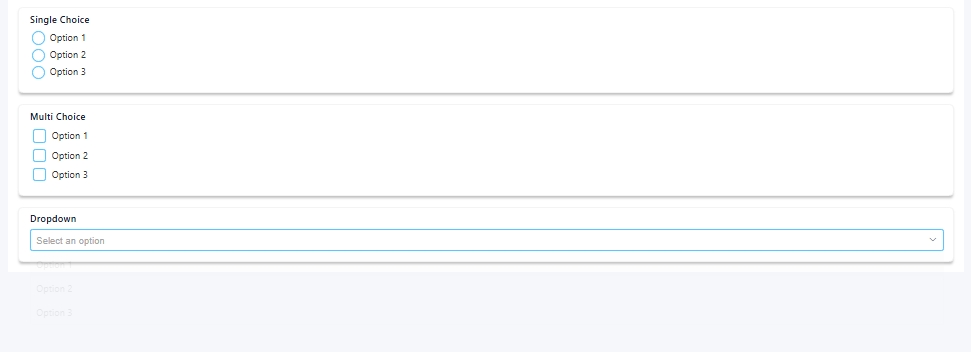
This article explains how Choice fields work in the Sintel Apps Designer and the difference between:

  • Choice – Dropdown
  • Choice – Single
  • Choice – Multi

Choice fields are used when users must select from predefined options instead of typing free text. When added to a form, they create a corresponding column in the underlying SharePoint list.
 

What Is a Choice Field?

A Choice field allows you to define a fixed list of options such as:

  • Department

  • Request Type

  • Priority

  • Category

  • Status

Using predefined choices improves:

  • Data consistency

  • Reporting accuracy

  • Filtering and grouping

  • Workflow logic reliability


1. Choice – Dropdown

What It Is: A single-selection field displayed as a dropdown menu.

How It Appears: Users click the dropdown and select one option.

Best Used For:

  • Department

  • Request Type

  • Priority

  • Region

  • Category

Key Characteristics

  • Only one option can be selected

  • Compact and clean appearance

  • Ideal for structured processes

  • Works very well with Logic and Workflow

When to Use:

Use Dropdown when:

  • Only one value should ever apply

  • You want a cleaner layout

  • The field drives workflow or approvals

This is the most common and recommended option for process-driven forms.

2. Choice – Single

What It Is

A single-selection field displayed as visible selectable options (typically radio buttons).

How It Appears

All options are shown on screen. Users select one.

Best Used For

  • Yes/No alternatives

  • Short option lists (2–4 options)

  • High-visibility decisions

  • Critical branching questions

Key Characteristics

  • Only one option can be selected

  • All options are visible immediately

  • Good for important decision points

When to Use

Use Single Choice when:

  • The number of options is small

  • You want users to see all options at once

  • The decision significantly affects form behaviour

Avoid using it for long lists — it can make forms cluttered.

3. Choice – Multi

What It Is: A multi-selection field allowing users to select more than one option.

How It Appears: Displayed as checkboxes.

Best Used For: 

  • Services required

  • Systems impacted

  • Applicable policies

  • Tags or categories

  • Skills or competencies

Key Characteristics:

  • Multiple selections allowed

  • Stored as multiple values

  • Can be used in Logic rules

  • Requires careful configuration if driving workflow

When to Use

  • More than one option may apply

  • You are collecting tags or classifications

  • The field does not require strict single-value control

Avoid using Multi if only one selection should be valid.

Comparison Overview


Feature Dropdown Single Multi
Selections allowed One One Multiple
Display style Dropdown list Radio buttons Checkboxes
Best for Structured processes Small option sets Flexible tagging
Space usage Compact Moderate Larger
Workflow simplicity High High Moderate

Configuring Choice Fields

When creating a Choice field, you can configure:

  • Label

  • Option list (one per line)

  • Default value

  • Required state

  • Visibility

  • Read-only state

  • Validation message

  • Styling

Carefully define your option list before publishing the form.

Using Choice Fields in Logic

Choice fields are commonly used to:

  • Show or hide sections

  • Make other fields required

  • Trigger workflow transitions

  • Change field states

Example:

If Request Type = Project, show the “Project Details” section.

For Multi fields:

If “Systems Impacted” contains “Finance”, display additional validation fields.

Best Practices

  • Use Dropdown for most structured fields.

  • Use Single when visibility of options is important.

  • Use Multi only when multiple answers are genuinely required.

  • Keep option lists consistent and clearly named.

  • Avoid long lists in Single or Multi fields.

Common Mistakes to Avoid

  • Using Multi when only one option should be allowed.

  • Creating similar or duplicate options.

  • Adding new options after building Logic without reviewing conditions.

  • Using free text instead of structured choices.


Key Things to Know

  • Choice fields create SharePoint choice columns.

  • Existing items retain their stored values if options change.

  • Multi-choice values may require more careful logic configuration.

  • Choice fields are ideal for workflow-driven forms.


➡️ Next article: Lookup Fields – When and How to Use Them

Was this article helpful?
0 out of 5 stars
5 Stars 0%
4 Stars 0%
3 Stars 0%
2 Stars 0%
1 Stars 0%
5
Please Share Your Feedback
How Can We Improve This Article?
Table of Contents

Sintel Apps

Create apps on Microsoft 365 in minutes with no code.

Address

River House
Blackpool Park,
Cork, T23 R5TF,
Ireland

Support

  • Product help
  • Community site
  • Submit a ticket
  • Compare us

    Contact us to

    • Book a demo
    • Request a license
    • Become a partner

    e-mail: info@sintelapps.com
    tel: +353 (0) 21 245 2935

    Follow us

    • Follow
    • Follow
    • Follow

    © Copyright 2026 | End User License Agreement | Privacy Policy | Terms Of Use

    Sintel Apps
    Sintel Apps Assistant
    Get instant answers and support
    Connecting to Sintel Apps Assistant…
    Sintel is thinking…
    We use cookies to collect and analyse information about the users of this website. Please click 'I accept' to consent to the use of this technology.